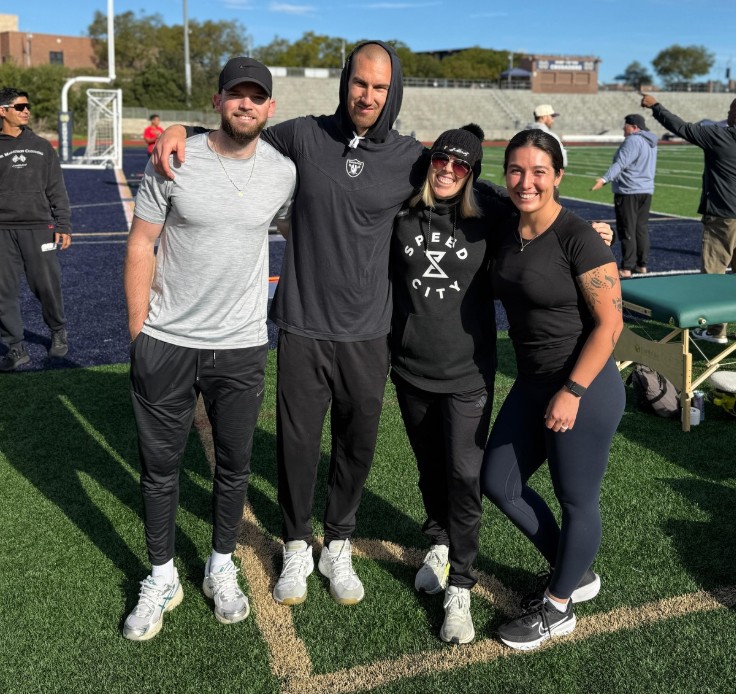
Evans on Elite Preparation and the "Professional Intent"
IslandStats.com
The NFL Combine in Indianapolis is often described as the most high-stakes "job interview" in professional sport. For the world’s elite collegiate athletes, it is a week of rigorous physical testing and psychological scrutiny. For Bermudian personal trainer Liam Evans, it was a rare opportunity to step behind the curtain and observe the pinnacle of athletic preparation.
Speaking with IslandStats, Evans reflected on his time embedded with a top-tier combine training programme, offering a unique perspective on what separates the professional elite from the amateur ranks.
Evans was quick to dispel the myth that professional training involves "super-advanced" or "secret" exercises that are inaccessible to the public. Instead, he noted that the true difference lies in the intent and intensity brought to the fundamental movements.
"At this level, your training is essentially your job; your life depends on it," Evans explained. "It’s not necessarily that they’re doing wild or different things. It’s that they are doing the fundamental exercises with incredible intent. Every lift, every sprint, has a meaning behind it."
During his week as an observer, Evans witnessed the grueling daily schedule of a Combine prospect. The day begins early with speed work and sprint preparation—the 40-yard dash being the "holy grail" of Combine metrics—before transitioning to strength work and, crucially, performance therapy.
For Evans, the challenge is now translating these "big-league" lessons to the Bermudian context, where fitness is often a personal pursuit rather than a professional requirement. He believes the most significant takeaway is the mentality of the athletes who eventually make it to the professional stage.
"Being in Bermuda, we can feel a little isolated from the rest of the world," Evans noted. "But you realize that the difference between the athletes who make it and those who don't often comes down to their approach outside the weight room. The successful ones don't need to be told to show up or do the right things; it’s innate within them."
Evans emphasizes that while the "training age" of a professional might allow for higher loads, the structure remains consistent with high-quality coaching at any level. The goal for local athletes, he suggests, is to adopt that "professional intent," regardless of whether a multi-million dollar contract is on the line.